Advocacy

Advancing the Voice of the Brick Industry
BIA works diligently to help safeguard the industry as called for in the Association's Mission Statement (to both promote and safeguard the industry.)
BIA does this through analysis of key policy issues, as well as practical programs to advocate for the brick industry position. This work is guided by BIA’s Government Affairs and Compliance committee, chaired by Brad Belden of The Belden Brick Company.
BIA Advocacy Focus
BIA’s government relations work focuses on three core priorities:
- Ensuring federal regulations are workable and practical for manufacturers and distributors
- Promoting policies that strenghten the construction workforce
- Educating policymakers about the economic impact and sustainability of brick manufacturing and distributing
Federal Regulatory Priorities
BIA closely monitors federal rulemaking and actively engages with agencies and Congress to ensure regulations affecting brick manufacturers are reasonable, achievable, and based on sound science.
Key Regulatory Issues
EPA Maximum Achievable Control Technology (MACT) Standard
Under the Clean Air Act, the Environmental Protection Agency regulates emissions of certain air pollutants from industrial facilities through Maximum Achievable Control Technology (MACT) standards.
EPA last updated the MACT standard for brick manufacturing in 2015. The agency is required to review these standards periodically to determine whether revisions are necessary.
BIA continues to monitor EPA activity and will engage in the regulatory process if the agency proposes revisions that affect brick manufacturers.
EPA Waters of the United States (WOTUS)
BIA has heard from numerous member companies that the WOTUS regulations have impacted their businesses in both hard to comply with requirements and in ongoing citations. On November 17, 2025 the EPA and the US Department of the Army announced a new proposed rule that would clarify the definition of “waters of the United States” and fully implement the Supreme Court’s decision in Sackett v. Environmental Protection Agency. The public comment period for this new proposed rule closed on January 5, 2026 and the agency is putting the final touches on these new definitions which should be more reasonable for our members to comply with. BIA submitted official comments during the public comment period and will continue to monitor this rule and ensure our members are aware of the final new regulations when they are published.
OSHA Heat Rule
Numerous Administrations have been working through the Occupational Safety and Health Administration (OSHA) trying to finalize a rule related to worker heat exposure. The latest proposed rule put together under the Biden Administration would be extremely overburdensome and costly to our members. The Biden Administration was not able to publish a final rule before the President left office so the rule now sits at OSHA under the Trump Administration. We do not expect the Trump Administration to move forward in finalizing this rule, but BIA will continue to monitor this rule. There are numerous states and localities that are moving forward with their own heat rules in light of the delay at the federal level.
Federal Legislative Priorities
BIA works with Members of Congress to advance policies that support manufacturing, address workforce shortages, and strengthen the construction economy.
Tarrif Policy
BIA continues to engage relevant Members of Congress and their staff regarding the current tariff landscape and the need for relief on products that our members can only source from specific foreign countries. We have compiled a list of impacted HTS codes and shared it with key offices. Through these efforts, we educate both Congress and the Administration on the impact of tariffs, keep our members informed about new tariffs and court decisions, and provide guidance on potential refund processes.
We will continue to do so and are actively watching the Court of International Trade and Customs and Border Patrol as they establish a tariff refund process after the Supreme Court said the President did not have the authority to implement tariffs under IEEPA. It is important to remember that every member’s tariff situation during the refund process will be extremely unique and nuanced. We recommend therefore, that members speak with their legal counsel and import brokers to work through their unique situations.
Workforce and Immigration Policy
Workforce availability remains one of the most significant challenges facing the construction and manufacturing industries.
BIA has endorsed the bipartisan Dignity Act, legislation designed to strengthen border security while establishing a structured legal work program for certain undocumented individuals who have lived in the United States for an extended period of time and have no criminal record.
The legislation also includes funding for workforce training programs for American workers, helping expand the talent pipeline for construction and manufacturing industries.
Toxic Substances Control Act (TSCA)
Congress must reauthorize the Toxic Substances Control Act before the end of 2026. The Senate Environment and Public Works Committee recently released draft legislation that they are looking for feedback on. BIA will continue to work the Committee and the House Energy and Commerce Committee as they continue to craft proposals.
BIA will continue working with congressional committees to ensure the reauthorization supports responsible chemical regulation while maintaining practical compliance requirements for manufacturers.
Workforce Pell Act
Late in 2025 the U.S. Department of Education concluded the first week of its Accountability in Higher Education and Access Through Demand-driven Workforce Pell (AHEAD) negotiated rulemaking committee, where negotiators reached consensus to create the federal government’s new Workforce Pell Grant program as outlined in President Trump's Working Families Tax Cuts Act (the Act).
Officials from the U.S. Department of Labor (DOL) partnered with Department officials and higher education stakeholders to help craft the consensus language to ensure the Workforce Pell Grant program develops and supports our nation's workforce. Starting in July 2026, students enrolled in short-term credential programs, including Emergency Medical Technicians, automotive mechanics, and more, will have access to Federal funds to help them attain high-wage, in-demand skills necessary for employment. BIA will continue to monitor the rollout of this program and ensure students are able to utilize this program and enter the brick industry workforce.
Dignity Act (H.R.4393)
BIA has official endorsed the Dignity Act, legislation introduced by Rep. Maria Salazar (R-FL) and Rep. Veronica Escobar (D-TX) that would codify and support a lot of the programs that President Trump has implemented to shut down the border, while at the same time allowing undocumented aliens who have been in the country for more than five years and have no criminal records to pay fines and enter a program to legally work in the United States. Part of the funding will go to support the retraining of American workers as well, ensuring that through both pipelines BIA members will have a steady, legal pathway to hire new employees as our industry continues to struggle with workforce issues.
Other Issues
BIA will also monitor legislative efforts related to infrastructure investments, housing policy, sustainability, disaster response, and tax and economic policy as the Second Session of the 119th Congress continues.
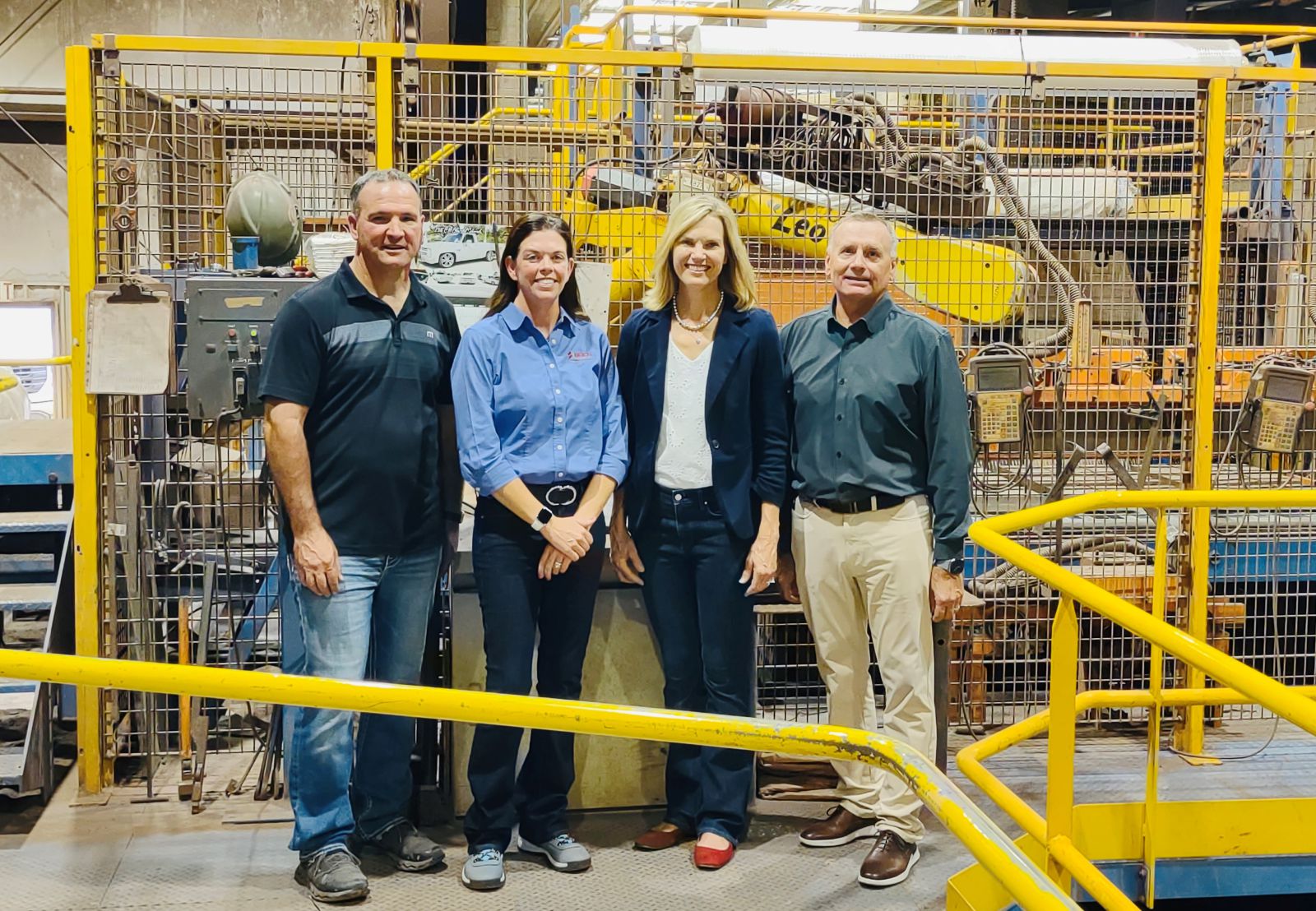
Bringing Policymakers Inside the Industry
Congressional Plant Tours
One of the most effective ways to educate policymakers is to show them how brick manufacturing works firsthand.
BIA regularly organizes tours of member manufacturing facilities for Members of Congress and their staff. These visits provide policymakers with a real-world understanding of the manufacturing process and the regulatory environment facing the industry.
Recent tours have included members of key congressional committees responsible for environmental, workforce, and manufacturing policy.
By strengthening relationships with policymakers from both parties, BIA ensures that lawmakers understand the importance of the brick industry to the American economy.